
Types of Electrical Grounding: Understanding LPS, Dedicated Mesh, and Utility Systems
- Elétrica Sustentável Automatizada

- 7 de fev.
- 5 min de leitura
Atualizado: 12 de mar.
Electrical grounding is the foundation of any engineering project that prioritizes safety and operational continuity. However, many professionals and clients still confuse the functions of protective grounding (Utility) with a Lightning Protection System (LPS) or a dedicated mesh for electronics.
In this comprehensive guide, we will demystify the types of grounding, current standards (NBR 5410 and NBR 5419), and how each system works in practice to protect lives and assets.

What is Electrical Grounding and Why is it Vital?
Contrary to popular belief, grounding isn't just "shoving a rod into the dirt." It involves designing a low-impedance path so that fault currents, overloads, and atmospheric discharges are safely dissipated.
Without an efficient system, the human body becomes the easiest path for electrical current (shock), and sensitive equipment suffers from surges that cause irreversible damage.
1. Utility Grounding and NBR 5410 Schemes
Utility grounding is the starting point for any consumer unit. It ensures the network's neutral has a zero-volt reference and protects against indirect contact. According to NBR 5410, systems are classified into three main categories:
TN System (Terra-Neutral)
The most common in Brazil. The power supply neutral is grounded, and the equipment enclosures (masses) are connected to it.
TN-S (S for Separate): The protective conductor (PE) and Neutral (N) are separate throughout the installation. This is the gold standard for hospitals and data centers.
TN-C (C for Combined): Neutral and Ground share the same conductor (PEN). Warning: This is prohibited in new residential installations.
💡 Practical Example: Accounting Office - Imagine an office with 20 interconnected computers. By using the TN-S system, the Neutral and Ground wires are separated starting at the main panel. This prevents electrical "noise" generated by air conditioning motors from interfering with data transmission, preventing server lag and crashes.
TT System (Terra-Terra)
In this system, the power source has its own grounding, and the consumer creates their own independently.
Requirement: The use of a GFCI/RCD (Residual Current Device) is mandatory, as fault current may be too low to trip a standard circuit breaker.
💡 Practical Example: Ranches and Farms - On a farm where power comes from a distant utility pole, the network grounding may be inefficient. The owner installs their own local ground mesh and a GFCI. If a well pump shorts out, the GFCI detects the leakage to this local mesh and cuts the power before anyone receives a shock through the water.
2. LPS (Lightning Protection System)
While NBR 5410 focuses on low voltage, the LPS (governed by NBR 5419:2015) focuses on the most destructive natural phenomenon: lightning strikes.
💡 Practical Example: Logistics Warehouse - In a warehouse with a metal roof, an engineer designs a Faraday Cage, creating aluminum meshes on the roof. When lightning strikes the structure, the current is divided among several down conductors. This prevents the lightning from "jumping" inside the warehouse, protecting employees and electric forklifts.
3. Dedicated Grounding and Electronic Mesh
Equipment like PLCs and servers require "clean ground." For these, we use Dedicated Grounding.
Key Difference: It uses insulated conductors to filter electromagnetic interference.
Warning: Never totally isolate this mesh; it must be bonded (equalized) to the main system to prevent Potential Difference (Voltage Drop).
💡 Practical Example: MRI Clinic - The manufacturer requires extremely low resistance (less than 1 Ohm). A specific mesh is built for the exam room. To prevent a lightning strike on the building from "frying" the machine's sensors, this mesh is connected to the building's MGB (Main Ground Bar). Everything is at the same potential level, but the equipment maintains its noise-free discharge path.

4. The Importance of Equipotential Bonding
A common mistake is failing to interconnect metallic masses.
💡 Practical Example: Chemical Industry - If a motor fails and the grounding is not interconnected with the gas piping, the motor casing could be at 220V while the pipe is at 0V. An operator touching both would receive a fatal shock. By connecting everything to the MGB (Main Ground Bar), we eliminate this voltage difference.
Technical Comparison: Which is the Right Application?
System Type | Main Focus | Base Standard | Practical Example |
Utility/Service | Shock Safety | NBR 5410 | Residential Service Entrance |
LPS (SPDA) | Lightning Protection | NBR 5419 | Buildings, Warehouses, and Factories |
Dedicated | Electronics Protection | NBR 5410 | Servers and Medical Equipment |
Maintenance and Measurement: The Role of the Ground Tester
Grounding suffers from corrosion over time. Visual inspections and measurements with a Ground Tester are fundamental.
💡 Practical Example: Field Measurement - During a condo inspection, an engineer uses the Wenner Method (4 stakes). If the resistance is higher than allowed, the practical solution is using exothermic welding (to prevent oxidation) and adding parallel rods to increase the dissipation area.

Safety is an Investment
Designing a robust grounding system is the only way to ensure your electrical installation is sustainable and safe. Compliance with ABNT standards is what separates a successful professional from an amateur.
Need safety and efficiency for your company’s electrical system?
E.S.A offers comprehensive solutions for LPS (Lightning Protection) and Grounding:
✅ Custom Project Design tailored to your needs.
✅ Technical Execution by industry experts.
✅ High-Precision Testing and Reporting.
High-complexity solutions to ensure the total protection of your infrastructure.
FAQ: Common Questions about Grounding and LPS
1. Can I use the building's steel structure as grounding?
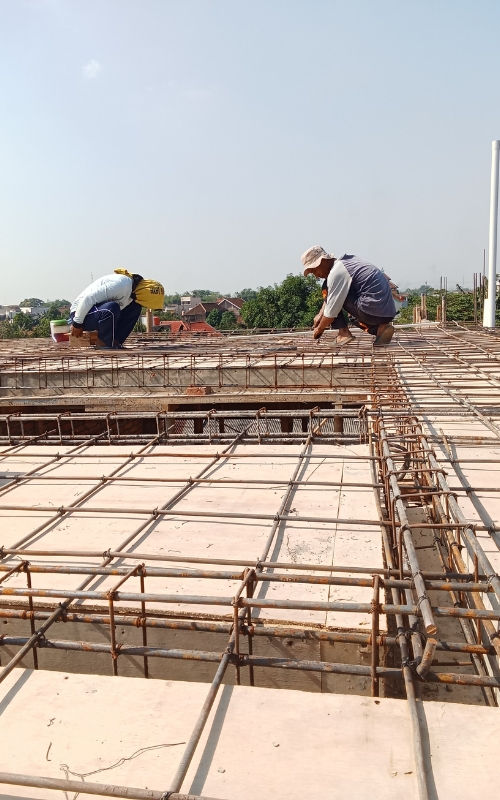
Yes. NBR 5410 and NBR 5419 recommend using the steel rebar of foundations (concrete) as a natural grounding electrode. This is extremely efficient but must be planned in the project to ensure electrical continuity throughout the structure.
2. What is the ideal grounding resistance?
Although NBR 5419 no longer stipulates a fixed value (like the old 10 Ohms), the engineering consensus is: the lower the impedance, the better. For sensitive electronics, values below 5 Ohms are generally targeted to ensure stability.
3. Can I connect the lightning rod ground to the outlet ground?
You must. According to the principle of equipotential bonding, all ground meshes in a building must be interconnected to the MGB. If you keep grounds isolated, a lightning strike can create a potential difference of thousands of volts between them, causing arcing and equipment failure.
4. What happens if I don't have grounding?
Besides the imminent risk of fatal shocks, your equipment remains vulnerable to electrical surges. Many manufacturers void the warranty on industrial machines and appliances if the installation lacks a functional protective conductor (PE).
Technical Glossary
MGB/BEP: Main Ground Bar (Barramento de Equipotencialização Principal).
Ground Rod: Metallic electrode driven into the soil.
SPD (DPS): Surge Protective Device (essential alongside grounding).
Wenner Method: 4-stake technique to measure soil resistivity before the project.
Exothermic Welding: Molecular connection between conductors that prevents poor contact due to oxidation.
Request Your Technical Inspection
An invisible grounding system might be a non-existent system. Don't take risks with labor inspections or insurance claims. E.S.A handles everything from the project to the technical compliance report.
#ElectricalGrounding #ElectricalEngineering #LPS #NBR5410 #NBR5419 #ElectricalSafety #LightningProtection #GroundMesh #GroundRod #SoilResistivity #WennerMethod #EquipotentialBonding #TNSystems #TTSystems #ITSystems #GFCI #SPD #ElectricalSurges #SafetyEngineering #IndustrialMaintenance #ElectricalAudit #ElectricalProjects #Electricity #ElectricalInstallations #ElectricalContinuity #ExothermicWelding #EnergyEfficiency #ESA #SustainableElectric

